
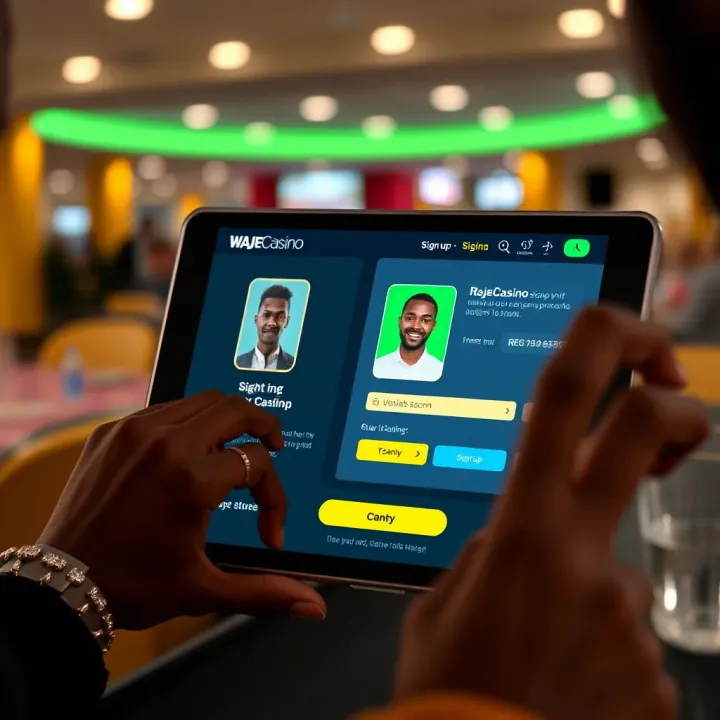
WajeCasino Mobile Guide for Nigerian Players
🎰 Play your favourite WajeCasino games on mobile anytime in Nigeria! Learn about apps, safety tips, payment methods, and boost your experience on smartphones and tablets.
Edited By
Bukola Adeyemi
Mlite and Wajecasino were among the earliest mobile casino platforms that introduced Nigerians to gambling via their phones. These platforms emerged before smartphones became widespread, so they operated mainly on basic feature phones, relying heavily on USSD codes and simple web interfaces. This limitation shaped their design, user experience, and accessibility.

USSD and SMS Integration: Both platforms used USSD codes to let users play casino games without needing internet access. This was a huge deal, especially in rural areas with weak data connectivity.
Simple Game Selection: The games were basic variations of slots, poker, and blackjack, stripped down to work smoothly on low-end devices.
Naira-Based Transactions: Users could fund their accounts and withdraw winnings in ₦, often through bank transfer or mobile money platforms like Paga and OPay.
User Account Management: Registration was streamlined but straightforward, often needing just a phone number and basic details.
Because internet infrastructure in Nigeria was quite patchy during the era these platforms thrived, Mlite and Wajecasino prioritised low data use and offline capabilities. However, users often complained about slow transaction times and occasional failed bets due to network issues.
Security was another challenge. While the platforms implemented basic safeguards, the lack of widespread digital literacy sometimes made users vulnerable to fraud, especially with unofficial impostor services mimicking them.
These early platforms laid the foundation for how Nigerians interact with mobile gambling now. Their use of USSD influenced certain fintech products that provide gaming services without constant internet access. Also, the integration of mobile money for transactions set standards now adopted by bigger players like BetKing and NairaBET.
Early mobile casinos like Mlite and Wajecasino showed that mobile gambling could reach beyond Lagos or Abuja to smaller towns, making gambling accessible to a wider audience.
In short, despite their limitations, Mlite and Wajecasino provided qualitative insight into the potential and pitfalls of mobile gambling in Nigeria’s unique environment. Understanding their legacy helps explain the rapid adoption of newer platforms as smartphone penetration rises and digital payments become more reliable.
Early mobile casino platforms like Mlite and Wajecasino set the stage for Nigeria's mobile gambling scene. Understanding their origins, features, and audience helps explain how mobile betting grew from basic services into the bustling sector it is today. This section sheds light on the foundation these platforms laid for current players and mobile apps.
In the early 2010s, mobile internet use was steadily increasing across Nigeria but data costs and smartphone penetration were limited. Platforms such as Mlite and Wajecasino emerged to exploit this emerging market by focusing on lightweight and accessible casino games. They relied on technologies compatible with feature phones and slow networks, like USSD codes and simple mobile web interfaces. Unlike today's high-end mobile apps, their design was minimal but purposeful, targeting users who lacked access to fast internet or advanced devices.
Mlite and Wajecasino shared some practical features tailored to Nigeria's mobile context. Both platforms offered easy account registration using phone numbers, enabling quick onboarding without complex KYC demands prevalent today. Their game libraries were limited but included popular options like slots and card games, optimised to run on low bandwidth. Another notable feature was integrated mobile payments, often through direct airtime deduction or simple bank transfers, catering to users unfamiliar with digital wallets. Mlite, for instance, placed focus on providing real-time balances and bet tracking to keep players informed despite limited screen sizes.
These platforms mainly appealed to urban youth and working-class adults who owned basic phones but desired the thrill of casino gambling. Many users were located in Lagos, Abuja, and Port Harcourt — cities with growing mobile connectivity yet uneven access to app stores or fast data. The convenience of accessing casino games without downloading heavy apps attracted busy commuters using danfos or okadas to play while on the move. Importantly, their approach tapped into Nigeria's growing interest in digital entertainment during the early 2010s, before smartphones became widespread and mobile banking matured.
Platforms like Mlite and Wajecasino showed that mobile gambling in Nigeria could work even with imperfect technology, paving way for the more sophisticated betting apps used today.

Understanding the core aspects of these early mobile casino platforms highlights why they gained traction despite limitations. Their adaptability to local conditions and user needs played a big role in shaping the mobile gaming industry that Nigerian players now enjoy on more advanced and feature-rich platforms.
The user experience (UX) and interface design of early mobile casinos like Mlite and Wajecasino were fundamental in shaping how Nigerian players accessed gambling on their devices. Back when smartphones were just gaining ground, many users still relied on basic or mid-range phones. This meant the platforms had to be lean and straightforward to avoid frustrating delays or crashes, which users had little patience for.
Design on early mobile casino platforms focused more on functionality than flashy graphics. Mlite, for example, presented a simple layout with menu options clearly listed and minimal distractions. This approach was practical—navigation had to be intuitive for users who were not very familiar with mobile apps beyond basic messaging or calls. Icons had to be self-explanatory without the luxury of space for detailed explanations.
Menu structures were usually linear, with a home screen leading to categories such as slots, table games, and account management. Wajecasino opted for clear call-to-action buttons, making it easy to place bets or check balances. However, the lack of touchscreens in many phones at the time meant users often navigated using directional keys or numeric input, which slowed the process compared to today’s standard taps and swipes.
One major consideration for these platforms was compatibility. Many users had feature phones running on basic Java or Symbian OS, far from the Android or iOS dominance we see today. Both Mlite and Wajecasino therefore offered lightweight versions of their casino games and interfaces, optimised to consume less data and work with lower processing power.
Performance was crucial; long loading times or app freezes could drive users away, especially when mobile data costs were steep compared to average income. The platforms avoided heavy animations or large image files, ensuring smooth gameplay even on devices with limited RAM and lower screen resolutions.
Despite best efforts, users faced several challenges. Poor network coverage in many Nigerian areas often led to frequent disconnections, disrupting sessions and sometimes causing loss of wagers. Additionally, limited screen sizes and low resolution affected game visibility and detail, making some gambling experiences less immersive.
Security was also a concern; older phones lacked sophisticated encryption technology, making responsible data protection harder for operators. Users had to trust platforms with their financial data without guarantees that would be standard today.
Early mobile casino platforms balanced simplicity and accessibility to introduce many Nigerians to mobile gambling, but the user experience was often hampered by device and network limitations.
In summary, Mlite and Wajecasino crafted their user interfaces with Nigeria's early mobile climate in mind. They kept navigation straightforward and ensured their platforms ran on modest hardware, helping increase mobile gambling reach. However, challenges with network reliability, slower inputs, and security were hurdles these platforms and their users had to face along the way.
Understanding the technological constraints and adaptations of early mobile casinos like Mlite and Wajecasino is key to appreciating how mobile gambling started shaping Nigeria's betting culture. These platforms had to work within tight limits imposed by network infrastructure, device capabilities, and emerging security demands. Thanks to these early challenges, operators found creative ways to serve users effectively despite limited resources.
Network quality in Nigeria during the rise of Mlite and Wajecasino was often erratic. Many users depended on 2G and 3G services, which meant slower connections and frequent drops. These restrictions forced developers to lighten their app designs, avoiding heavy graphics or prolonged loading times. For example, rather than flashy animations, Mlite emphasised simple text interfaces and basic icons to minimise data consumption and improve speed.
Data affordability was another practical issue. With high mobile data costs, especially for those relying on limited prepaid plans, operators adjusted by introducing USSD-based betting options or minimalist app versions requiring just a few kilobytes. Users appreciated this because it let them play on the move without draining their airtime excessively.
Back then, many Nigerians used tokunbo smartphones or feature phones with low RAM, limited storage, and outdated operating systems like Symbian or early Android versions. These hardware constraints meant casino apps had to be really lightweight and compatible across multiple platforms.
Wajecasino, for instance, developed versions that balanced performance and accessibility — stripping down unnecessary features while ensuring core games ran smoothly even on phone models sold for less than ₦20,000. The absence of app stores for some devices also meant apps were often distributed via downloadable links or as embedded mobile web apps, highlighting creative adaptation to software ecosystems.
Security was another hurdle. Early mobile casino platforms operated with limited encryption and often lacked multi-factor authentication, exposing users to potential fraud. Despite this, Mlite and Wajecasino implemented basic security layers like SSL connections to protect user data and transactions.
In Nigeria's context, safeguarding payment information was vital since many players used mobile money wallets, bank transfers, or airtime top-ups for funding their wallets. Operators also had to educate users on safe password practices and warn against phishing scams, especially as cybersecurity awareness was still developing.
These early technological constraints shaped not just the platforms themselves but the habits and expectations of Nigerian mobile gamblers, laying groundwork for today’s more advanced, yet user-friendly, mobile betting apps.
The journey of Mlite and Wajecasino reflects a time when smart technological compromises meant putting accessibility and security first, even if that meant fewer bells and whistles. Their adaptations deserve credit for expanding mobile gambling access to many Nigerians despite infrastructural and device limitations.
Early platforms like Mlite and Wajecasino played a significant role in sparking Nigeria's mobile gambling scene. These platforms introduced many Nigerians, especially adult gamers with smartphones, to easy access betting options without needing expensive desktop setups. By offering games optimised for basic mobile devices common in Nigeria, they tapped into the growing mobile penetration and changing consumer habits, especially in urban areas like Lagos and Abuja.
Mlite and Wajecasino helped drive demand for mobile gambling by providing accessible options when internet data costs were still relatively high. Their simple, lightweight interfaces meant players could enjoy slots and card games on less powerful devices without draining too much data or requiring fast 4G connections. This inclusivity opened up mobile gambling beyond wealthy elites to middle-class and working Nigerians, many of whom use mobile banking platforms to fund their bets.
For instance, the early success of Mlite encouraged similar sites to launch, increasing competition and variety in the market. This heightened awareness created a snowball effect, with more players willing to try mobile gambling. It also encouraged telecom providers to offer data bundles targeted at gaming apps, easing affordability and boosting active users.
The user experience lessons from Mlite and Wajecasino influenced the design and functionality of later casino apps like Bet9ja Mobile and NairaBet. These newer platforms improved loading speeds, introduced richer graphics, and integrated NGN payment options directly via bank transfers, USSD codes, and fintech wallets like OPay and Kuda.
Additionally, early mobile casino platforms showed the importance of simple navigation and quick game turnaround due to Nigeria’s often unreliable network coverage. Later apps adopted these principles but also offered push notifications, loyalty rewards, and social features to keep users engaged longer. Wajecasino’s initial focus on localised themes and Nigerian culture set a trend for games that resonated better with local players, thus improving retention.
Mobile gambling’s growth has attracted increased attention from regulators like the National Lottery Regulatory Commission and Nigerian Communications Commission (NCC). Early platforms operated in a loosely regulated environment, which sometimes led to concerns about transparency and player protection.
Today, operators must comply with stricter licensing requirements and ensure compliance with anti-money laundering (AML) policies, partly due to the need to safeguard users against fraud. The Central Bank of Nigeria’s regulations on payment platforms also impact how funds move in and out of mobile casinos, affecting usability. These frameworks aim to balance market growth with consumer protection, a challenge given Nigeria’s expanding but still partly informal betting sector.
Early mobile casino platforms like Mlite and Wajecasino were instrumental in shaping Nigeria’s approach to mobile gambling, from technology adoption to regulatory frameworks. Their influence remains vital in understanding the sector’s current dynamics.
In summary, these early platforms set the groundwork for Nigeria’s robust mobile gaming market today. They broke down barriers to access and built local awareness, paving the way for more sophisticated, user-friendly apps that align with Nigerian users’ realities and regulatory expectations.
🎰 Play your favourite WajeCasino games on mobile anytime in Nigeria! Learn about apps, safety tips, payment methods, and boost your experience on smartphones and tablets.
🎰 Wajecasino MLite delivers smooth gaming for Nigerians on low data devices. Explore games, quick sign-up, secure payments & smart tips for fun and fair play! ₦
📱 Discover how Nigerian users can shop and play safely on WajeCasino mobile. Learn payment options, registration tips, top games, and stay responsible while enjoying ₦ fun.
Explore WajeCasino old mobile booking login in Nigeria 📱. Learn registration steps, solve common login issues, and compare old vs. new interfaces for better bets ₦.
Based on 15 reviews