
WajeCasino Old Mobile Login Guide for Nigerians
Explore WajeCasino old mobile booking login in Nigeria 📱. Learn registration steps, solve common login issues, and compare old vs. new interfaces for better bets ₦.
Edited By
Fatima Suleiman
Wajecasino's old mobile web platform is a snapshot of Nigeria’s early mobile internet days. Back when many Nigerians were just getting used to browsing on phones, the site offered a lean, straightforward experience that focused on speed and basic functionality. Unlike modern platforms, its design was stripped down, prioritising quick access over flashy graphics — an important choice given limited bandwidth and handset capabilities.
The mobile interface used simple layouts and easy-to-navigate menus that worked well on basic 2G and 3G networks common in many Nigerian cities and towns. For instance, the homepage featured clear lists for available games and betting options without overwhelming users with pop-ups or heavy images.

Wajecasino’s approach was a practical response to infrastructural constraints at the time. Users with older smartphones or limited data plans could still enjoy accessing games without waiting long for pages to load. This focus on speed and accessibility ensured that even casual mobile users could navigate without frustration.
Some notable features included:
Text-based navigation menus that allowed easy movement between sections.
Minimalistic graphics that reduced data consumption.
Basic forms optimized for mobile input, easing user interactions for betting and account management.
Despite its humble appearance, the old Wajecasino platform set a benchmark for mobile usability during Nigeria’s early mobile internet era.
Comparing this with current gaming platforms shows how much has changed. Today’s mobile sites boast richer visuals, animations, and seamless real-time features powered by faster 4G and LTE networks. Yet, the simplicity and efficiency of Wajecasino’s old platform still hold lessons, especially for regions with unstable network coverage or limited device specs.
Understanding this old design helps appreciate how Nigerian mobile gaming evolved alongside improving tech infrastructure. It also sheds light on the needs of users who value quick, reliable access without unnecessary frills — a segment still significant in Nigeria’s diverse market.
By studying Wajecasino’s initial mobile web experience, developers and digital entrepreneurs can learn how to balance rich features with accessibility, maintaining inclusivity for all mobile users regardless of their device or data constraints.
Understanding the origins and placement of Wajecasino in Nigeria’s mobile gaming world offers valuable insight into the early days of mobile internet. Wajecasino carved a niche in a market where mobile connectivity was growing but still faced infrastructural challenges. This overview sets the stage for appreciating how mobile web platforms catered to gamers when smartphones and data networks were not as strong or widespread as today.
Wajecasino emerged as a local online gaming site tailored for Nigerian users, focusing mainly on casino-style games like slots and card games. Unlike international platforms, Wajecasino leaned into serving users who accessed its services largely through mobile web browsers rather than dedicated apps. This approach made sense in a market where many users had feature phones or low-end smartphones and limited access to high-speed mobile data.
The brand earned recognition not just for its game offerings but also for its attempt to create a mobile-friendly environment during a period when many casinos were desktop-only. Its early adoption of mobile web access helped users participate in online gaming without needing high-end devices or stable broadband connections.
The mobile web platform for Wajecasino was a pared-down version of its desktop site, designed to load quickly on 2G or 3G networks common in Nigeria in the early 2010s. This lightweight approach used simpler graphics and minimal animations to reduce data consumption. For instance, menu layouts were mostly text-based with sparse iconography, allowing faster loading speeds on devices with limited processing power.
Users could navigate the mobile web via common browsers available on their phones, such as Opera Mini or UC Browser, which were popular given their data compression capabilities. This meant a wide range of Nigerians could enjoy gaming with reduced data costs—a practical benefit considering the price of mobile data in Nigeria.
Mobile web platforms like Wajecasino’s early site bridged a critical gap for Nigerian gamers, offering access where apps were impractical due to device and network limitations.
In short, the Wajecasino mobile web presence reflects a key chapter in Nigeria’s digital gaming evolution, showing how technology adapted to local realities and user needs. This section highlights the foundation upon which later improvements and innovations in Nigerian mobile gaming were built.
The old mobile version of Wajecasino reflects the early days of mobile internet in Nigeria, designed with practical limitations and user needs in mind. Its features catered to players accessing the platform mostly through basic smartphones and networks with limited bandwidth. Understanding these features sheds light on how Wajecasino balanced functionality and accessibility during that period.
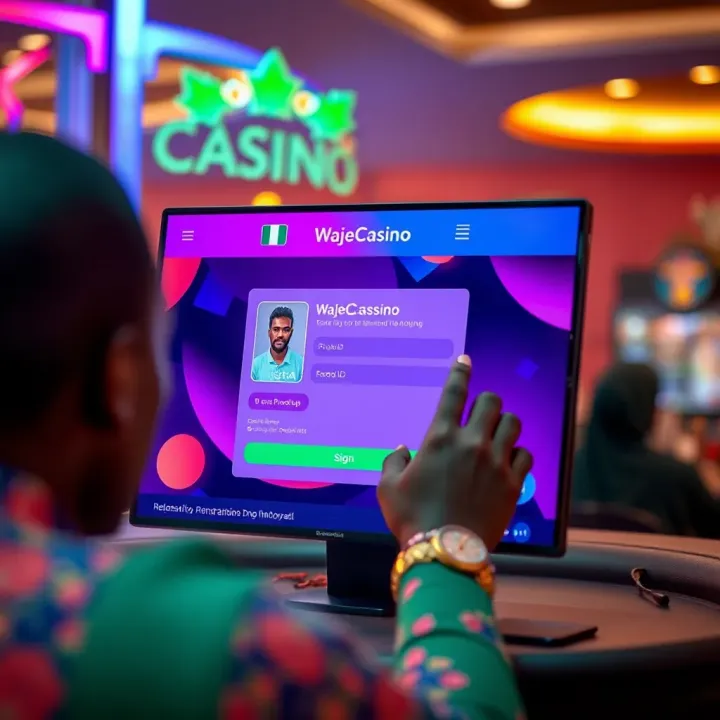
The design was straightforward, with minimal graphics and simple colour schemes to reduce loading times on slow connections. Buttons and links were big enough to be tapped easily on smaller screens but without the slick animations common on modern sites. For example, the homepage primarily featured a list of game categories with bold fonts and basic icons to indicate slot machines, card games, or live casino options. This uncluttered layout helped users focus on navigation rather than flashy distractions, which tends to drain data quickly and slow devices down.
Navigation was linear and menu-driven, often with collapsible sections to keep the interface clean despite small screens. Users could jump from the lobby to game rooms with just two or three taps, helping reduce frustration from complex menus. However, the lack of advanced search or filtering meant users had to scroll through games manually, which could be time-consuming. Still, the site performed reliably on popular Nigerian smartphones such as Tecno and Infinix, given the optimisation for lower-end hardware and 3G network coverage common in many parts of the country.
Despite some clunkiness in browsing extensive game lists, the old mobile site ensured players could access core functions like deposits, withdrawals, and customer support without switching devices.
Wajecasino's old mobile version offered a respectable selection of games, mainly slots and a few table games like blackjack and roulette, which were easier to stream or play in HTML5 or simple JavaScript. Performance-wise, games were lightweight to avoid excessive data use and to work smoothly on phones with 1GB RAM or less. Loading times averaged between 8 to 15 seconds on 3G networks—a delay frustrating by today's standards but acceptable back then.
While live dealer games were mostly absent due to their higher data demands, the platform ensured that popular slot titles were accessible, providing familiar gameplay even with limited mobile tech. These limitations shaped the user expectations around mobile casino play, focusing more on convenience than immersive graphics or advanced features.
In summary, the old mobile Wajecasino was a functional tool tailored for its time: simple design, easy navigation, and judicious game selection combined to serve Nigerian gamers in an era before widespread 4G or 5G coverage and powerful smartphones.
Understanding the hurdles experienced by users of Wajecasino's old mobile web platform sheds light on the evolution of mobile gaming in Nigeria. These challenges often shaped user satisfaction and engagement, influencing how the site was used in real-life conditions where internet and device capabilities varied widely.
Early mobile internet in Nigeria was plagued by slow speeds and limited bandwidth, making it tough for users to enjoy smooth gaming experiences. Many gamers accessed Wajecasino through 2G or EDGE networks, which often resulted in long loading times and frequent interruptions. For instance, spinning a slot game reel could take several seconds longer than expected, disrupting the gameplay rhythm.
On top of that, early mobile browsers had little support for rich multimedia content. Wajecasino’s old platform had to rely heavily on simplistic graphics and minimal animations to accommodate this, which restricted the overall appeal and immersive quality of games. At the time, many users owned basic devices like Nokia feature phones or low-end Androids with modest processing power, limiting the complexity of games that could run smoothly.
Network reliability varied significantly across Nigerian cities and rural areas, often affecting access sharply. Users in Lagos might enjoy relatively better 3G coverage, while deeper rural regions struggled with weak signals or none at all. Such network inconsistency meant that a game session could be abruptly cut off or suffer lag, frustrating players who depended on slower mobile data plans.
Besides connectivity, device capability played a huge role. Many users operated on phones with small screens, low-resolution displays, and limited memory—factors that restricted both user interface clarity and game performance. For example, navigation menus sometimes appeared cramped or overlapped text, causing misunderstandings or mis-clicks.
These technical and environmental factors explain why Wajecasino’s old mobile site needed to keep features simple—aiming to offer a usable experience even under tough network conditions and on modest devices.
Despite these setbacks, the presence of a mobile platform was crucial in an era when access to personal computers for gaming was still limited among the average Nigerian. The old mobile web version provided a touchpoint for many users to explore online gaming, even if the experience was far from perfect.
In sum, the limitations of early mobile internet infrastructure and the diversity of device capabilities shaped Wajecasino's initial mobile service design. Recognising these issues helps appreciate the progress made and indicates areas that any upgrade or modernisation must address.
Examining the gap between Wajecasino’s old mobile platform and today's mobile gaming options offers valuable lessons for both users and developers. This comparison sheds light on how far mobile web technology has progressed, especially in Nigeria, where mobile internet is the main gateway to online entertainment. It highlights practical improvements in design, performance, and user experience, while also pointing out areas where legacy platforms could adapt to meet current expectations.
Mobile web technologies have gone through significant changes since Wajecasino’s early days. Back then, mobile browsers were often limited to basic HTML and compressed images to save data and improve loading times. Today, technologies such as Progressive Web Apps (PWA), HTML5, and WebAssembly enable richer, faster, and more interactive experiences without needing dedicated apps. For instance, modern platforms can offer smooth animations and real-time multiplayer games directly through the browser, which was rarely possible on older mobile sites.
Moreover, mobile network improvements from 3G to widespread 4G—and now growing 5G coverage—have drastically reduced latency and increased bandwidth. This allows Nigerian gamers to enjoy games that require rapid data transfer and complex graphics, a sharp contrast to the lag and simplified interfaces common in older mobile platforms like Wajecasino’s.
In Nigeria, mobile gaming now combines improved connectivity with increased smartphone penetration. Popular titles extend beyond simple casino games to include multiplayer battle games, fantasy football, and augmented reality experiences. Platforms by companies like Gamsole and Kuluya reflect this shift, blending local themes with global game mechanics.
Payment integration is a pivotal trend. Modern gaming sites and apps support quick deposits and withdrawals via Nigerian fintech solutions such as Paystack, Flutterwave, and OPay, ensuring a smoother user experience. Users expect fast loading, seamless gameplay, and reliable payment options—features that were either missing or rudimentary on older platforms.
To stay relevant, Wajecasino could update its mobile platform by embracing current technology standards. Switching to a PWA framework would provide a near-app experience without forcing users to download anything. This approach optimises for lower data consumption, important given the cost of mobile internet in Nigeria.
Enhancing game variety with social and interactive elements could also boost engagement. Integrating quick-loading games compatible with 4G, offering localised bonuses, and improving payment gateways to accept multiple Nigerian bank cards and mobile money options would attract a broader audience.
Finally, adopting modern UI/UX principles—such as clean layouts, easy navigation, and responsive design for various screen sizes—would significantly improve user satisfaction. Wajecasino’s evolution can learn from successful Nigerian platforms that blend cultural relevance with cutting-edge tech.
Comparing old and new mobile gaming options is not just about technology. It reflects user expectations, network realities, and the need to deliver engaging, reliable experiences tailored for Nigerian gamers.
In sum, this comparison stresses the value of continual adaptation. For Nigerian gamers who have witnessed this evolution firsthand, recognising these changes helps set informed expectations about what they can demand from future gaming solutions on mobile web platforms.
Access to mobile internet has significantly influenced how Nigerians engage with online casino gaming. As mobile data coverage expanded beyond urban centres to semi-urban and rural areas, platforms like Wajecasino found new users who previously had limited opportunities to access online gaming. The growth of affordable smartphones and data plans from telecom providers such as MTN, Glo, and Airtel further opened the door for a larger demographic to explore mobile casino games.
Nigeria’s mobile data penetration has surged in recent years, reaching over 50% of the population by 2023, according to the Nigerian Communications Commission (NCC). This expansion was fuelled by competitive pricing from service providers and the availability of inexpensive devices, some of which are tokunbo smartphones. Mobile internet now extends to densely populated states like Lagos, Kano, and Rivers, as well as to more remote parts such as Kwara and Taraba, though with varying speeds.
This growing data access means more Nigerians can connect to mobile-friendly sites, including online casinos that have historically struggled with reach. For example, a player in Lokoja can now access Wajecasino via mobile, a possibility that was farfetched a few years ago when internet was limited to desktop in offices or homes with poor bandwidth.
Mobile internet growth has translated directly into increased online gaming participation across Nigeria. Players no longer need to rely solely on PC or physical casinos; instead, mobile web platforms let them play on the go—even while commuting on an okada or during lunch breaks at work.
Casino platforms like Wajecasino have capitalised on this shift by tailoring their games to consume less data and fit smaller screens. Such optimisation addressed the challenges of Nigerians using limited data plans and older devices. The convenience of accessing games anytime also encourages regular play.
The rise in mobile internet means online casinos can reach diverse players, from Lagos city dwellers to traders in Aba, expanding the industry's footprint.
However, the quality of network remains a key factor. In areas with unstable connections, game loading and performance still suffer, leading to frustration. Casinos that provide lightweight versions of their platforms tend to retain users better under these conditions.
The growing mobile internet ecosystem in Nigeria also boosts digital payment adoption (e.g., Paystack, Flutterwave), which simplifies deposits and withdrawals for online gamers. Easy access to mobile money and bank apps complements gaming, making real-money play smoother and more secure.
In summary, mobile internet growth has shaped online casino access by broadening reach, improving user experience, and integrating payment methods—all of which make platforms like Wajecasino more viable and attractive to Nigerian players today.
Explore WajeCasino old mobile booking login in Nigeria 📱. Learn registration steps, solve common login issues, and compare old vs. new interfaces for better bets ₦.
🎰 Discover how WajeCasino's old mobile site serves Nigerian players on older phones with smooth games, flexible payment options, and trusted security for all your betting needs.
Want to use WajeCasino's old mobile site in Nigeria? 🎰 Get easy steps, solve common issues & enjoy smoother play with limited data or slow internet. 📱

🎰 Discover how to access and register on the old Wajecasino mobile app in Nigeria 🇳🇬. Get tips for smooth login and a hassle-free betting experience on the go.
Based on 8 reviews